Pitch Your Podcast for Best Podcasts of the Year Lists: A 6-Step Plan
A 6-step plan to pitch your podcast for best podcasts of the year lists, with the October-to-December timeline editors follow and a press kit checklist.
Every year, major media outlets, niche publications, and influential blogs publish their best podcasts of the year lists, and for the shows that make the cut, the benefits are immediate: a surge in downloads, new loyal listeners, and industry credibility. Most podcasters treat these lists as a long shot, sending a few hurried emails in late November and hoping for the best. Editors and curators scout months in advance, and they respond to a pitch that shows real thought behind it.
This guide walks through how to pitch your podcast for best podcasts of the year lists: the timeline editors actually work on, how to tell whether your show is ready, what belongs in the pitch itself, and how to package a press kit that makes saying yes easy.
Why best podcasts of the year lists matter
When someone browses a best podcasts of the year roundup from Apple, Spotify, a major newspaper, or a trade publication like Podnews, they are actively in discovery mode. Unlike passive advertising, these lists put your show in front of engaged listeners who are primed to try something new.
A single placement can deliver:
- Credibility: the stamp of approval from a respected outlet.
- SEO value: these articles rank for years and keep sending traffic.
- Network growth: fellow creators, guests, and brands take your show more seriously.
- Listener spikes: exposure to thousands of targeted potential listeners in one push.
That kind of exposure is also why we treat podcast PR as a standing, year-round part of a show’s growth plan.
ℹ️ Good to know
A single best-of placement can keep sending traffic for years, since these roundup articles tend to stay indexed and ranked long after they first publish.
Step 1: Map the best-of-the-year timeline
Before you pitch, know what you are pitching into.
Editorial teams plan seasonal coverage far ahead of when it publishes. A monthly magazine can be planning its December gift guide as early as June, and a media pitching guide from Cision puts it plainly: journalists work on stories weeks, sometimes months, before they run. Best podcasts of the year roundups follow the same pattern. Most outlets open their pitching window in October and close it by late November, with the finished lists publishing in November or December. Pitch after that window closes and you have missed the cut for the year.
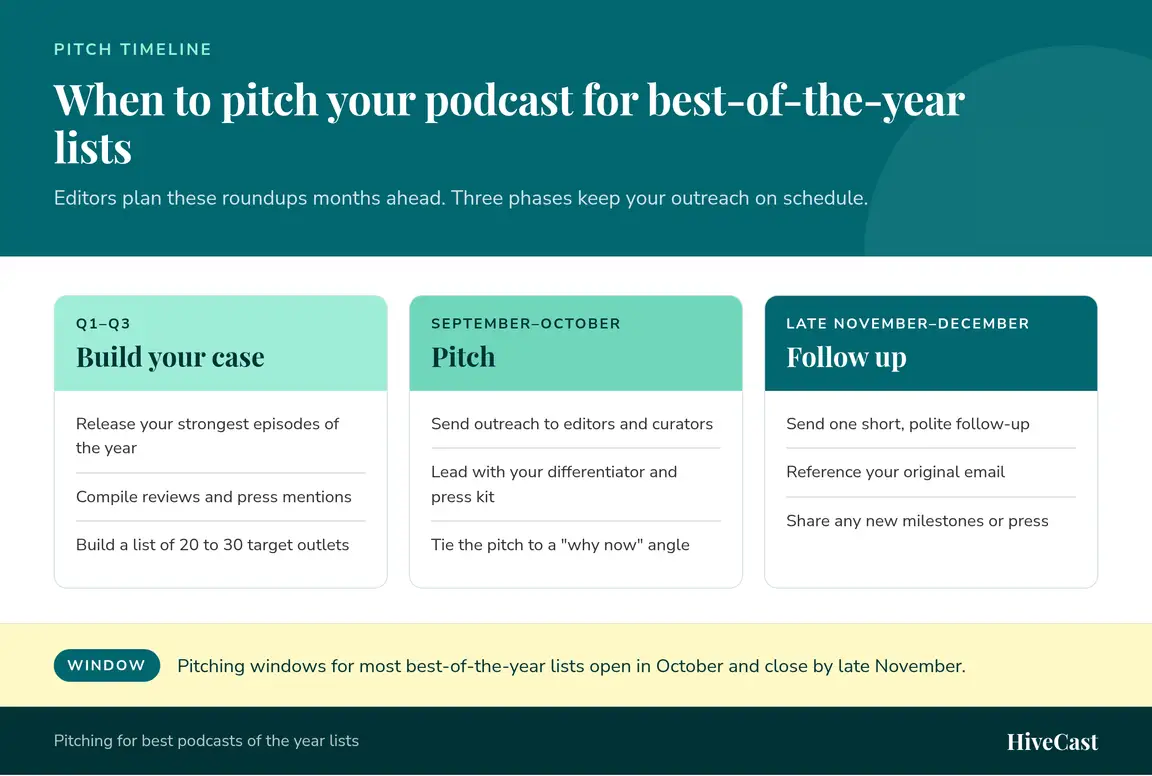
The three phases to plan around:
- Q1 to Q3: release your strongest episodes and compile reviews and press mentions so you have material to point to.
- September to October: begin outreach, leading with why your show deserves consideration this year.
- Late November to December: send a short follow-up reminder if you have not heard back, then let the list run its course.
Beyond timing, curators weigh originality, execution, cultural relevance, and production quality. There is also more than one kind of list to target: broad “best overall” roundups from outlets like major newspapers, genre-specific lists from niche sites, and community-driven lists on Reddit or newsletters. Build a target list of 20 to 30 outlets, blogs, and newsletter writers who publish year-end podcast roundups relevant to your category, and start with the smaller, genre-specific ones where the competition is lighter.
Step 2: Make sure your show is worth pitching
Some seasons and episodes are stronger candidates than others for a best-of pitch. Before you write to a single editor, check three things:
- Episode quality: is your audio clean and tightly edited?
- Brand consistency: does your artwork, show description, and social presence look like a professional show?
- Positioning: what makes this year different, a standout interview, original reporting, or a format nobody else in your category is doing?
If you cannot answer “why this year” clearly, your pitch will not land. This is where a production partner like HiveCast helps. We work on the audio engineering, episode editing, and brand polish that make a show look and sound ready, so by the time you pitch, the show itself is not the weak link.
Step 3: Craft a pitch editors want to open
Your pitch needs to balance professionalism with personality. Editors do not have time for long introductions. They need to know what your show is, why it stands out, and why their readers will care, in a few short paragraphs.
A strong pitch for best podcasts of the year consideration includes:
- A concise show summary: one sentence that explains the premise clearly.
- What makes it different: your hook, storytelling approach, or angle of expertise.
- Proof of audience impact: listener growth, notable guests, awards, or press mentions.
- Your strongest episodes: direct links with a short, specific description of each. Pulling from your strongest episodes here does double duty, since the same episodes that hook a new listener are the ones that make an editor’s case for including you.
- A “why now” angle: a theme, trend, or cultural moment relevant to their audience this year.
Step 4: Package a press kit editors can say yes to
The easier you make it for someone to feature you, the better your odds. Build a one-page press kit or a single shared folder that includes:
- A concise show summary and host bios with headshots.
- Short and long show descriptions.
- Notable guests and topics covered.
- Links to your podcast on the major platforms.
- Correctly sized cover art: Apple’s official artwork spec calls for a square image between 1400x1400 and 3000x3000 pixels as a PNG or JPG, with the largest size preferred.
Share the folder as a link, since large attachments clog inboxes and slow a busy editor down. If you are also courting sponsors, the same media kit you build for that outreach covers most of what a best-of pitch needs too.
💡 Keep it light
Share your press kit as a link instead of an email attachment. Large files clog inboxes and slow down an editor who is deciding quickly.
Step 5: Build visibility before you ever hit send
If you have worked with journalists, other podcasters, or industry partners, let them know you are pitching. A warm introduction can move your show ahead of hundreds of cold submissions.
Share your show’s milestones publicly on LinkedIn, X, or Threads, since curators often scan social platforms for momentum while compiling their lists. If you are already turning podcast clips into leads with a comment-to-DM setup, the same clips that capture a new subscriber also show a curator that your show has an audience that engages.
Step 6: Send one short follow-up after 2 to 3 weeks
If you have not heard back within 2 to 3 weeks, send one polite, short follow-up:
- Reference your original email.
- Add any new milestone or recent press mention.
- Keep it to three sentences.
Send that follow-up once. A second unprompted nudge is more likely to annoy the editor than to win the spot, and it can cost you a future pitch too.
A second unprompted nudge is more likely to annoy the editor than to win the spot, and it can cost you a future pitch too.
Are best-of-the-year lists the same as podcast awards?
No. Best podcasts of the year lists and podcast awards look similar from the outside, but they run on different rules. A best-of list reflects one editor’s or critic’s judgment, compiled as part of a publication’s regular year-end coverage, and you get on it by writing directly to the person putting the list together. A podcast award runs on a formal entry process instead, usually with a submission form, a deadline, category rules, an entry fee, and a panel of judges reviewing every entry.
Both are worth pursuing, and they are not mutually exclusive. The press kit, strongest-episode links, and proof of audience impact you build for a best-of pitch cover most of what a podcast awards entry form asks for too, so putting that material together once pays off in both places.
Making best-of pitching part of your yearly calendar
Getting on a best podcasts of the year list comes down to finding the right editors and giving them everything they need to say yes quickly: a clear pitch, proof your show delivers, and a press kit that removes friction. Building that case takes most of a year. The strongest pitches come from shows that release solid episodes on schedule and keep a running file of reviews and milestones, so there is real material to point to when outreach season arrives.
A well-timed pitch can put your podcast in front of an audience you could not reach any other way, with SEO and credibility benefits that outlast the list itself. The rest of our strategy articles cover that kind of long-range planning. Schedule a free discovery call and let’s talk about getting your show ready for next year’s lists.
Frequently Asked Questions About Pitching Best of the Year Podcast Lists
When should I start pitching my podcast for best podcasts of the year lists?
Start building your case in the first three quarters of the year by releasing strong episodes and collecting reviews, then send your pitch in September or October. Most outlets open their pitching window in October and close it by late November, and many plan seasonal coverage months ahead of publication, so a pitch that lands in December is almost always too late.
What should I include in a podcast press kit?
Keep it to one page or a single shared folder: a concise show summary, host bios and headshots, short and long show descriptions, notable guests or press mentions, links to your podcast on the major platforms, and correctly sized cover art. Editors decide quickly, so the easier you make it to say yes, the better your odds.
What size should my podcast cover art be for a press kit?
Apple Podcasts accepts square artwork between 1400x1400 and 3000x3000 pixels as a PNG or JPG, and the largest size in that range is preferred. Export your show art at 3000x3000 pixels so it holds up whether an editor uses it as a small thumbnail or a large feature image.
How do I follow up on a podcast pitch without being annoying?
Wait 2 to 3 weeks, then send a short note that references your original email and adds anything new, such as a milestone, a press mention, or a strong recent episode. Keep it to three sentences and send it once. A second unprompted follow-up after that is more likely to annoy the editor than to help your case.
Does HiveCast pitch podcasts to the press for me?
No. HiveCast focuses on the production quality and promotional assets that make a pitch land, professional audio editing, brand-consistent artwork, and SEO show notes, plus the strategy work that identifies your differentiator. Sending the actual pitch emails is on you, but we make sure the show behind the pitch is ready to be featured.
What is the difference between a general best podcasts list and a genre-specific one?
General lists from outlets like major newspapers or the platforms themselves compete against every show in every category, so they tend to favor familiar names and broad cultural relevance. Genre-specific and niche lists from smaller blogs, newsletters, and community boards have far less competition and often care more about originality and production quality than raw audience size, which makes them a better first target for a growing show.
Want this handled for you?
You record the episode, and HiveCast handles the editing, show notes, graphics, and scheduling. We have produced more than 5,000 episodes, and there are no long-term contracts.
More on Podcast Strategy
Related Articles

Podcast for Business: 5 Ways Experts Win Clients With a Show
A podcast for business does five jobs, from warming up prospects to earning search traffic. See what to track for each, written for coaches and experts.
How to Turn Podcast Clips Into Leads With ManyChat
Learn how to use ManyChat podcast clips and turn Instagram engagement into leads with automated DMs, smarter CTAs, and a better podcast funnel.
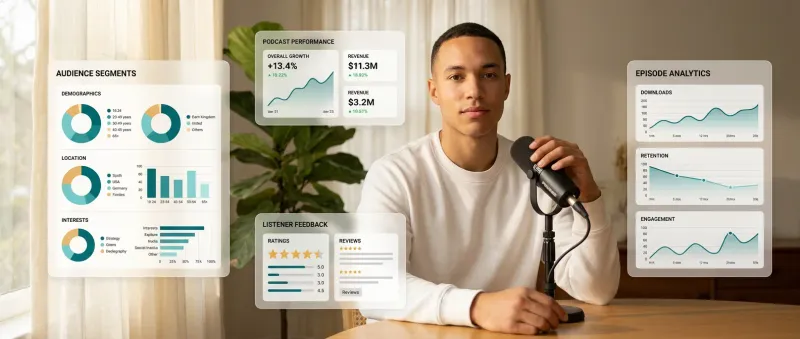
Spotify’s New Play Count: What the 30-Second Rule Means
Spotify now counts a play only after 30 seconds. Here is why your numbers may drop, what the new creator analytics show, and how to respond.