Podcast PR for Business Owners: A 5-Step Press Coverage Plan
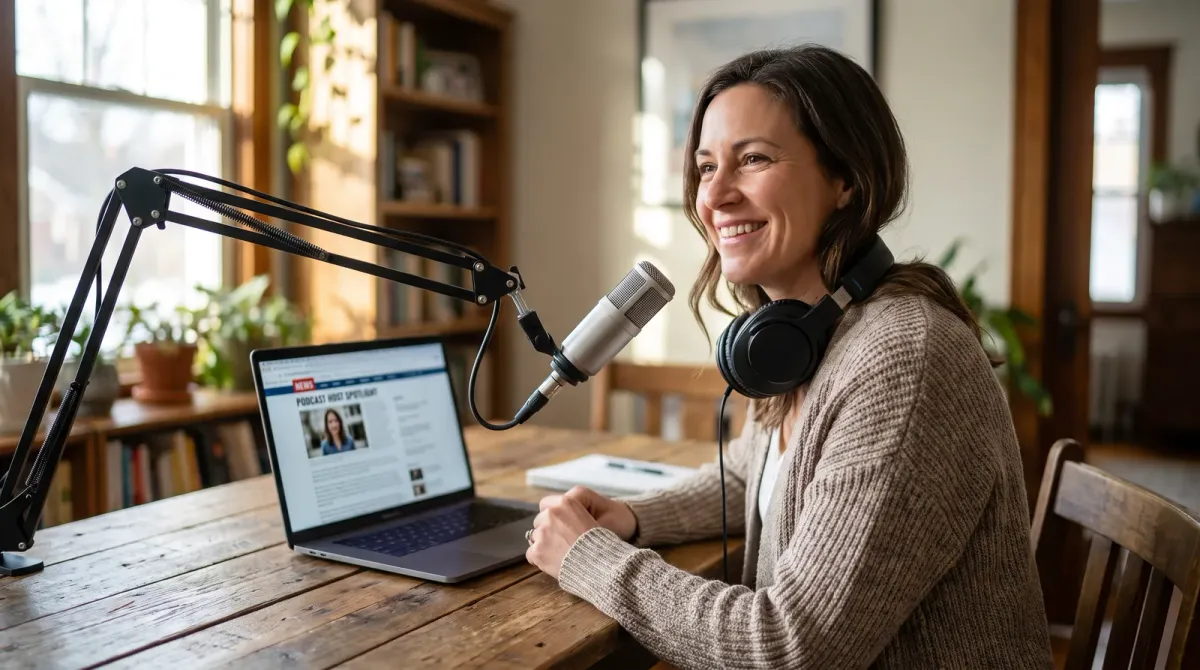
Podcast PR for business owners: a 5-step plan to earn press coverage, which links still help SEO under Google's link rules, and how to reuse each one.
A good show still needs people to find it, and the usual discovery tactics take more hours than most business owners have. Podcast PR is one of the more efficient options. A single article, newsletter feature or guest spot puts your show in front of an audience someone else spent years building, and the people who arrive that way already trust the source that sent them.
We first published this post in 2023. Since then, Google has spelled out which media links count for search and which don’t, and journalists have kept relying on pitches to find stories. This update covers what podcast PR does for a business, which kinds of coverage are worth your time now, and a 5-step plan for earning them.
What podcast PR is and how it differs from promotion
Podcast PR means earning attention for your show from sources you don’t control or pay. That includes news sites, trade publications in your industry, newsletter writers, editors who compile best-of lists, and hosts of other shows who interview you.
It sits alongside the broader work of podcast promotion, which covers your own social posts, email list, paid ads and cross-promotion. The difference is who is talking. With promotion, you tell people about your show. With PR, someone your audience already trusts does it for you, which is why a single mention can carry more weight than a month of your own posts.
There is a large audience to reach. The Infinite Dial 2026 from Edison Research at SSRS found that 58% of Americans age 12 and older, about 167 million people, consumed a podcast in the last month. The job of podcast PR is to make sure the right slice of that audience hears about your show.
Why podcast PR is worth the time for business owners
For an expert or business owner, press coverage does three separate jobs, and one good placement can do all three at once.
It sends referral traffic to pages that matter
When a publication mentions your show and links to it, some of its readers click. Decide in advance where those clicks should land. The best destinations are usually the episode the article discusses, a show page on your own website that explains who the podcast is for, or a business page such as your lead magnet, your book or your booking calendar. A link to a page that gives the visitor a clear next step is worth more than a link to a generic homepage.
It builds search authority, with conditions
Links from respected publications tell search engines that your site is a credible source on its topic, which supports your podcast SEO over time. That part of our 2023 advice still holds. What has changed is how clearly Google separates earned links from bought ones.
Google’s spam policies list paid links that pass ranking credit, and links with optimized anchor text in articles, guest posts or press releases distributed on other sites, as link spam. Paid and sponsored links are allowed only when they carry a nofollow or sponsored attribute, which means they don’t pass ranking credit. Our earlier version of this post said the anchor text on a press link didn’t matter much. The more useful advice now is not to chase keyword anchors at all. Let the journalist write the link however reads naturally in their article, and put your effort into earning the coverage.
It makes your show more credible to guests and clients
When a well-known publication has covered your show, say so in your guest outreach. A line such as “featured in [publication] for our episode on [topic]” gives a busy guest a reason to say yes. The same mention works on your website, in your speaker bio and in sales conversations, where it helps prospects show up to calls already convinced you know your field.
Which kinds of podcast coverage help search rankings
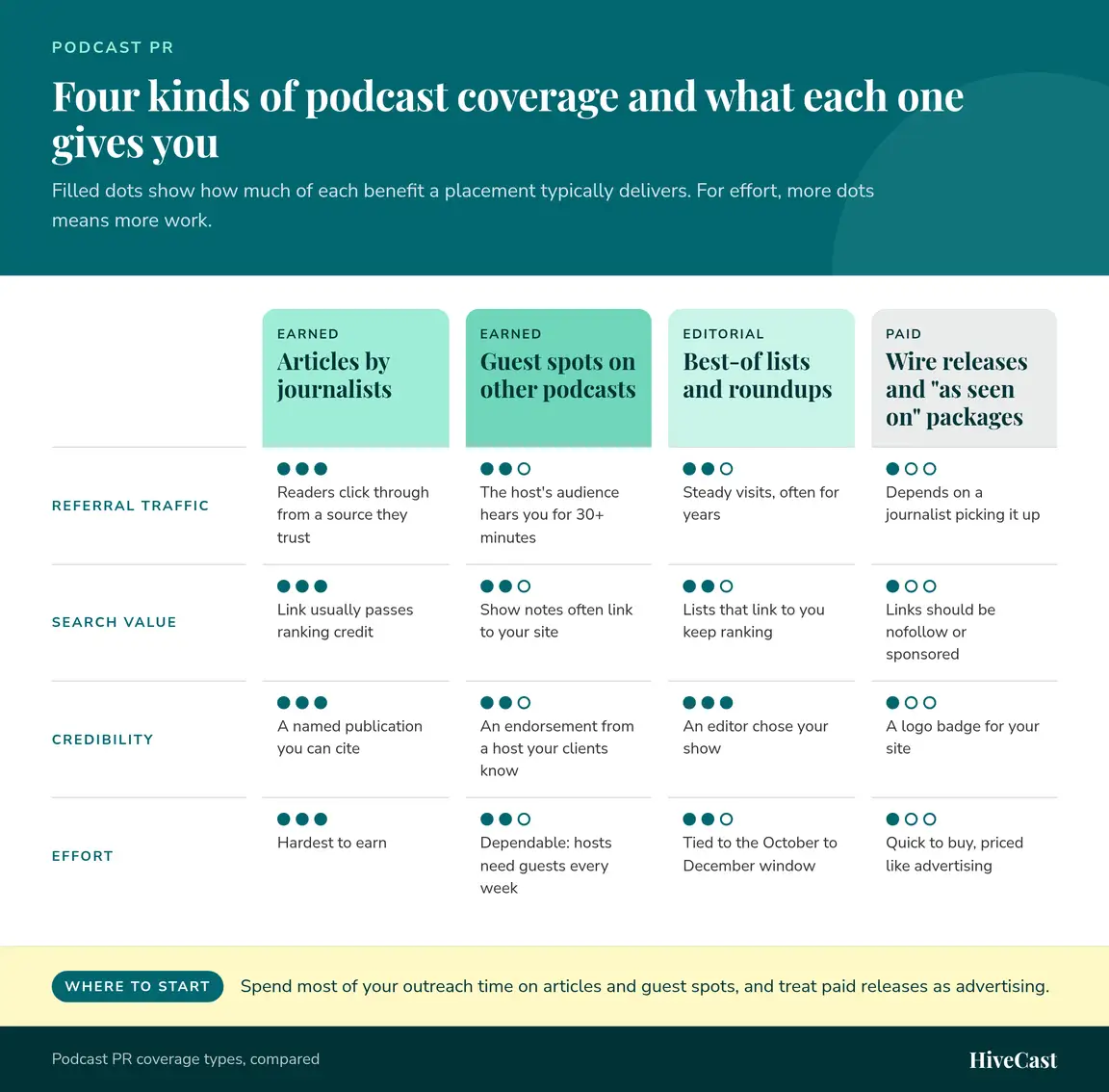
Not every mention does the same job. Some coverage brings readers, some builds search authority, and some mainly adds a logo you can show on your site. The graphic below sorts the four types business podcasters run into most often.
Earned editorial coverage
An article written by a journalist or editor who chose to mention your show is the most valuable kind of coverage. It brings readers, it usually carries a link that passes ranking credit, and it gives you a named publication to reference. It is also the hardest to get, which is why the 5-step plan below focuses on it.
Guest appearances on other podcasts
Being a guest on a show your clients already listen to puts you in front of their audience for 30 minutes or more. The host’s show notes often link to your site, and the episode itself keeps finding new listeners for months. For many business owners, this is the most dependable form of podcast PR because hosts need guests every week.
💡 Good to know
Guest spots are often the easiest kind of podcast PR to land, since hosts need new guests every week. Treat them as a steady channel, not a one-time favor.
Best-of lists and roundups
Year-end roundups and “podcasts to follow” lists bring credibility and steady traffic, and they often rank in search for years. They run on an editorial calendar, so timing matters. Our guide to pitching for best-of-the-year lists covers the October-to-December window most editors work to.
Paid releases and “as seen on” packages
Wire distribution services and paid placement packages can get a release onto dozens of news sites in a day. Under Google’s policies, those links are expected to be nofollow or sponsored, so they add little search value. They can still be worth it as a credibility badge or as a way to reach a journalist who might write an original story, but budget for them as advertising.
How to run podcast PR in 5 steps
The plan below is built for a business owner who has an hour or two a week for outreach. Each step makes the next one easier, so work through them in order the first time.
1. Decide what the coverage should do
Pick the business result before you pick any outlets. If you want more discovery calls, aim for publications your buyers read and send the link to a page with a booking button. If you want speaking invitations, aim for industry trade outlets and event organizers’ newsletters. A clear podcast strategy answers this question before you send a single email, and it keeps you from spending time on coverage that looks good but brings the wrong audience.
2. Build a press-ready episode page
A journalist who clicks through to your show should find a clean, well-edited episode and a page that explains it quickly. That page needs a specific title, a short summary, the guest’s name and credentials, timestamps for the main points, and a link to listen on Apple Podcasts, Spotify and the other major directories. Pair it with a starter playlist of three to five strong episodes so a reader who likes the first one has somewhere to go next.
💡 Before you pitch
Finish your episode page before you contact anyone. A journalist who clicks through should see a clear title, summary and listening links already in place.
3. Find a news angle journalists can use
Journalists write about stories their readers care about, so a pitch about your show on its own rarely turns into coverage. According to Muck Rack’s State of Journalism 2026 survey of 897 journalists, 86% say at least some of their work began with a PR pitch, so a relevant pitch still gets read. What makes it relevant is an angle the journalist’s readers care about. Good angles for a business podcast include:
- A finding or opinion from an episode that adds something to a story already in the news.
- An expert guest who can speak to a timely topic in your industry.
- A milestone with a story behind it, such as a client result that started with an episode.
- Original data, such as a survey of your listeners or clients.
4. Pitch a short list of relevant outlets
Build a list of 15 to 25 outlets, newsletters and podcasts your clients follow, and note which writer or host covers your topic at each one. Send each a short, personal email: one sentence on the angle, two or three on why it fits their readers, and a link to the episode page. Follow up once after a week or two if you hear nothing. A small list pitched well every month does more than a large list pitched once.
5. Put every mention to work
Once coverage lands, use it in as many places as you can. Add the publication to your website and media kit, mention it in guest invitations, and share the article with your email list. Ask listeners who found you through the coverage to leave podcast reviews, since reviews give a new visitor a reason to press play. Keep a running file of every mention so your next pitch can point to it.
A small list pitched well every month does more than a large list pitched once.
Can you do podcast PR without hiring an agency?
Yes. Most of the work in the plan above is research, writing and follow-up, and an expert who knows their field can do it well in a few hours a month. An agency mainly saves you time and brings existing relationships with journalists. If you hire one, ask which outlets they have placed clients in recently and whether any part of the package is paid placement, since that changes what the coverage is worth for search.
What a PR agency can’t fix is the show itself. If the episodes are hard to listen to or the show notes are thin, coverage sends people to a page that doesn’t keep them. That is the part we handle at HiveCast. We don’t pitch journalists for our clients, but our team edits every episode, writes SEO show notes, creates two promotional graphics per episode and publishes to Apple Podcasts, Spotify and all the major directories on your schedule.
Making press coverage a regular part of how your show grows
Podcast PR works best when you do a little of it every month. Decide what each piece of coverage should do for your business, give journalists an angle and a page worth linking to, and favor earned articles and guest spots over paid releases that add little search value.
The other half of the work is a show that is ready to be found. With more than 5,000 episodes produced, our team knows what a press-ready episode needs. Schedule a free discovery call and let’s talk about getting your show ready for its next round of coverage.
Frequently Asked Questions About Podcast PR
What is podcast PR?
Podcast PR is the work of earning coverage for your show from people you don't pay: journalists, trade publications, newsletter writers, editors of best-of lists, and other podcast hosts who invite you on as a guest. The goal is a mention, interview or link from a source your ideal clients already trust.
Is podcast PR the same as podcast promotion?
No. Podcast promotion covers everything you do to get episodes in front of people, including your own social posts, email list and ads. Podcast PR is the part where someone else tells their audience about you. Most shows need both, and the press coverage you earn becomes material for your own promotion.
Do press release distribution services help podcast SEO?
Not much on their own. Google's spam policies list links with optimized anchor text in press releases distributed on other sites as link spam, and paid links are expected to carry a nofollow or sponsored attribute. A wire release can still help with credibility and reach if a journalist picks up the story and writes their own article, but the release itself should not be your search strategy.
How long does podcast PR take to show results?
Plan on a few months. Journalists often plan stories well ahead, a single pitch rarely lands on the first try, and search engines take time to crawl and weigh new links. Shows that pitch a small, relevant list every month and publish consistently in the meantime see the steadiest results.
Does HiveCast pitch my podcast to journalists?
No. We don't run media outreach for clients. Our team produces the episodes your pitch points to: professional audio editing, SEO show notes, two promotional graphics per episode, and publishing to Apple Podcasts, Spotify and all the major directories within 5 business days. Our strategy work also helps you find the angle and audience your outreach should target.
Is PodAmp still available?
No. PodAmp was a podcast PR service we mentioned in the 2023 version of this post, and it is no longer offered. The podamp.fm site is offline. If you want help preparing your show for press coverage, a discovery call is the best place to start.
What happens on a HiveCast discovery call?
It's a free 20-minute conversation about your show, your business goals and where you want the podcast to take you. We'll talk through how production, podcast SEO and strategy fit your plans, answer questions about pricing ($500 a month for bi-weekly episodes or $875 a month for weekly, with no long-term contracts), and tell you honestly whether HiveCast is the right fit.
Want this handled for you?
You record the episode, and HiveCast handles the editing, show notes, graphics, and scheduling. We have produced more than 5,000 episodes, and there are no long-term contracts.
More on Podcast Strategy
Related Articles

Podcast for Business: 5 Ways Experts Win Clients With a Show
A podcast for business does five jobs, from warming up prospects to earning search traffic. See what to track for each, written for coaches and experts.
How to Turn Podcast Clips Into Leads With ManyChat
Learn how to use ManyChat podcast clips and turn Instagram engagement into leads with automated DMs, smarter CTAs, and a better podcast funnel.
Spotify’s New Play Count: What the 30-Second Rule Means
Spotify now counts a play only after 30 seconds. Here is why your numbers may drop, what the new creator analytics show, and how to respond.