Podcast Episode Structure Explained: From Intro to Outro

Master podcast episode structure to boost listener retention and business growth. Get expert tips, segment strategies, and actionable steps. Start now!
Key Takeaways:
- A repeatable, nine-step episode structure (from hook to outro) dramatically increases listener retention, authority, and business results by turning each episode into a strategic asset.
- Aligning your episode structure with show notes optimization and clear calls to action enhances discoverability, listener navigation, and conversion rates, making your podcast a measurable driver of business growth.
- Consistent segment timing, purposeful transitions, and focused engagement techniques streamline production, improve listener experience, and make it easy for teams to scale business-grade podcasts.
Recent research shows that 67% of podcast listeners consume entire episodes when shows follow a clear structure. Without one, most listeners drop off within the first three minutes.
A repeatable run-of-show transforms your podcast from scattered content into a business asset that drives measurable results. This blueprint covers nine steps that reduce production time, boost listener retention, and create consistent touchpoints for lead generation.
Transform your episodes into a strategic advantage with expert guidance from HiveCast.fm, which provides personalized podcast strategy sessions that align your structure with your growth goals.
What Is a Podcast Episode Structure?
Your podcast episode structure is a repeatable sequence that guides listeners from hook to outcome while aligning with your business goals. Think of it as your show’s blueprint, a documented run-of-show that you can follow episode after episode. Research shows that podcast listeners actively engage with content and make purchasing decisions based on what they hear, making your structure a direct path to measurable business results.
Your structure becomes a business asset when you mirror your podcast episode structure in your show notes optimization strategy. Document your run-of-show once, then use consistent naming, timestamps, and keywords in your show notes to boost SEO and listener navigation. Studies show that environmental context significantly affects how listeners engage with podcasts, especially when multitasking or on the go. Clear timestamps and descriptive chapter headings help busy listeners find value quickly, whether they’re exercising, commuting, or working.
1. Episode Hook Strategies: Open With a Cold Start
Your episode hook is the deciding factor that determines whether someone becomes a subscriber or scrolls past. Research shows that new consumers discover podcasts through short social clips, meaning your opening seconds must work as standalone content.
The best episode hook strategies skip lengthy show introductions and music, diving straight into your core value proposition. Here’s how to craft hooks that convert within that critical 10-20 second window:
- Lead with a counterintuitive statement or a surprising statistic that challenges conventional thinking in your industry.
- Pose a specific problem your target listener faces, then promise the exact solution coming up.
- Share a brief, relatable story that previews the transformation or outcome you’ll deliver.
- Use numbers and timeframes to create urgency: “In the next 18 minutes, you’ll learn the three-step framework that:”
- Record your hook after completing the main content to highlight the episode’s strongest insight.
Your hook should feel like a movie trailer for your episode content. When you nail this opening, you’re not just retaining listeners. You’re creating starter playlist material that converts casual browsers into loyal subscribers. This approach aligns with proven podcast pilot strategies that prioritize listener value from the first second. Track your success using Apple Podcasts Analytics to see how your first 30 seconds perform across episodes.
2. Podcast Episode Introduction: Brand and Promise
A strong podcast episode introduction transforms casual listeners into committed subscribers. Research shows that 20-35% of listeners drop off within the first five minutes, making this brief window your chance to establish trust and create anticipation. Here’s how to craft an introduction that converts browsers into subscribers:
- State your target audience and the specific transformation they’ll experience today.
- Use consistent theme sound treatments and/or music and voice-over elements for instant brand recognition.
- Tease 1-2 specific takeaways without revealing the complete solution.
- Include your show’s core promise in one clear, benefit-focused sentence.
- End with a transition phrase that builds momentum into your main content.
Studies on sonic branding confirm that consistent audio elements improve recognition and perceived trust. Your introduction becomes a sonic signature that builds familiarity and positions your expertise before you dive into content.
3. Segment Transitions: Guide the Ear With Purposeful Pacing
Smooth segment transitions keep listeners engaged without disrupting their listening experience. Use brief musical stings (3-5 seconds) or a consistent signature phrase like “Now let’s talk about…” to signal movement between topics.
Keep transitions under 10 seconds total to maintain momentum. Before each transition, preview what’s coming with a benefit-focused line: “Coming up, I’ll show you the three-step framework that cuts client onboarding time in half.” This approach helps listeners stay oriented and creates anticipation, following established scripting best practices.
Batch-record your transitions during a single session to maintain consistent energy and tone across episodes. Create a library of reusable phrases, such as “Before we dive into that…” or “Here’s what you need to know…”, that work across multiple show formats.
When you master these segment transitions, your audio quality remains professional throughout. This production approach saves time and ensures your team can easily replicate the structure, turning your podcast into a scalable business asset that drives consistent results.
4. Main Content Delivery: Structure Your Deep Dive for Retention
Your main content delivery can make or break listener retention, directly affecting your authority-building and lead-generation potential. When you organize information strategically, listeners stay engaged longer and take action on your recommendations.
- Follow the Problem → Framework → Examples → Action Steps sequence to create a satisfying progression that feels complete and actionable.
- Chunk your content into 3-5 segments, delivering one major insight every 3-5 minutes to match natural attention spans and prevent cognitive overload.
- Use callbacks to your intro promise at each transition with phrases like “this ties back to what I mentioned earlier” to show clear progress.
- Create consistent segment names and timing markers so listeners can easily navigate and reference your most valuable insights later.
- End each segment with a brief recap that reinforces the key takeaway before introducing the next concept.
This approach works because our brains can only process about 4 chunks of information simultaneously. When you respect these limits, you satisfy what podcast listeners crave most: clear, actionable information they can actually use. Structure your episodes this way, and you’ll transform casual browsers into engaged subscribers who see you as their go-to expert, turning your podcast into a measurable business asset rather than an unfocused discussion.
5. Guest Interview Structure: Building a Run-of-Show
Guest interviews can establish your expertise and generate qualified leads when structured properly. A well-planned guest interview structure keeps conversations focused while extracting the insights that turn casual listeners into engaged prospects.
- Open with credibility plus connection: State their expertise, then ask about their personal journey to that expertise.
- Move from strategic to tactical: Start with “why” questions, progress to “how” methods, then ask for proof and results.
- Sequence toward future insights: End with “what’s next” questions or trend predictions that position both of you as forward-thinking.
- Prepare two backup questions: Have ready prompts for when guests give short answers or drift off-topic.
- Include one rapid-fire round: Ask 3-5 quick questions for quotable, shareable sound bites that boost social media reach.
The BBC Academy emphasizes that responsive question sequencing and active listening create more authentic, valuable exchanges than rigid scripts. Harvard Business Review notes that structuring interviews around evidence and outcomes produces measurable results, which aligns perfectly with business-focused podcasting goals.
This guest interview structure framework works whether you’re recording your pilot episode or building episodes for your starter playlist. The key is maintaining conversational flow while hitting your business objectives and giving listeners clear takeaways they can act on immediately.
6. Audience Engagement Techniques: Interact Without Derailing Flow
Effective audience engagement techniques start with choosing one device per episode to maintain focus and prevent listener overwhelm. Research shows that parasocial connections drive podcast loyalty, but too many interaction points create mental strain.
Whether you use a Q&A prompt, poll, or inbox question, stick with that approach for the entire episode. A listener survey can be particularly effective for gathering structured feedback while keeping your episode streamlined and professional.
Direct all listener responses through one submission channel to simplify your workflow and improve attribution tracking. Host authenticity and clear calls to action drive listener action, so name-check specific listeners or questions during your episode to reinforce community connection.
This personal touch encourages repeat participation without adding production complexity. Your team can easily track engagement metrics when responses flow through a single email or form, turning listener feedback into trackable business results.
7. Episode Recap and Summary: Lock In Learning and Shareability
Your episode recap and summary drive measurable business results by converting passive listeners into active advocates who remember and share your insights. Research shows that retrieval practice significantly improves retention when listeners actively recall key points rather than passively consuming content. Here’s how to apply this retention science to your episodes:
- Distill three actionable takeaways using your own phrasing to reinforce your unique positioning and expertise.
- Repeat memorable frameworks or acronyms from your content so listeners can easily reference and share them.
- Assign one micro-action that takes under 10 minutes to complete, creating immediate momentum and engagement.
- Keep your recap to 60-90 seconds to maintain attention while delivering maximum value and impact.
- Use consistent language patterns in your recap that mirror your show notes for better discoverability.
A strong episode recap and summary doesn’t just summarize. It packages your expertise into quotable, shareable moments that extend your reach. When listeners can easily remember and repeat your frameworks, your influence multiplies beyond the original episode.
8. Podcast Call to Action: Convert Attention Into Business Results
Your podcast call to action turns episode listeners into email subscribers, consultation bookings, and paying clients. A well-crafted CTA converts your episode from content consumption into measurable business growth.
- Choose one specific CTA that directly connects to your episode content and delivers immediate value.
- Create frictionless access with a vanity URL mentioned verbally and linked in your show notes.
- Use trackable links with UTM parameters to measure which episodes drive the most conversions in Google Analytics.
- Lead with the benefit in one clear sentence that explains what listeners get and why it matters.
- Place your CTA after delivering value but before the outro to capture peak engagement.
Effective CTAs require strategic placement and clear value propositions. When you make subscribing or downloading as simple as clicking an Apple Podcasts deep link, you remove friction and increase conversion rates that directly impact your bottom line.
9. Podcast Outro Best Practices: Closing an Episode
Your outro should feel like a natural conclusion, not an abrupt ending. Thank your listener sincerely, restate your show’s core promise, and reinforce the single call to action you mentioned earlier.
Research from Edison Research shows podcast engagement continues rising, but listeners appreciate focused messaging over scattered asks. Keep your outro clean by avoiding new requests or multiple CTAs that dilute your primary conversion goal.
Turn Your Structure Into a Business Asset
A repeatable episode structure does more than make production easier. It turns every episode into a predictable driver of authority, audience growth, and leads. Document your run of show, follow it, and the format stops being something you rebuild week after week.
That consistency is the difference between a show you scramble to produce and one that runs on a system, with results you can actually measure.
When you’re ready to put a structure like this to work, HiveCast.fm handles the strategy, production, and distribution, so you can focus on the ideas that grow your business. Book a strategy session to map your run of show to your growth goals.
Frequently Asked Questions
How do you structure a podcast episode?
Most episodes follow the same arc: a hook, a short intro, the main content split into a few segments, a recap, one call to action, and an outro. The order rarely changes. What changes is how you fill the main content, which depends on whether you're running a solo show, an interview, or a panel.
How long should a podcast episode be?
There's no fixed rule. Length should match the value of the content, not a target time. Most business and interview shows land between 20 and 45 minutes, but consistency from episode to episode matters more to retention than any specific number.
What are the parts of a podcast episode?
Seven parts cover most shows: a hook, an intro, the main content broken into segments, transitions between them, a recap, a call to action, and an outro. Not every episode needs all seven, but the intro, main content, and outro are non-negotiable.
What should you say at the beginning of a podcast?
Open with a hook before anything else: a surprising stat, a sharp question, or the exact problem your listener wants solved. Follow it with a short intro that names who the episode is for and what they'll walk away with. Keep the whole opening under a minute so you reach the content before listeners drop off.
What's the difference between a solo and interview podcast structure?
The opening and closing are the same. The middle is where they split. A solo show runs hook, intro, problem, framework, examples, action steps, then CTA and outro. An interview runs hook, intro, guest intro, strategic questions, tactical questions, future focus, then recap, CTA, and outro.
Where should ads go in a podcast episode?
Mid-roll, at a natural break between content segments, where listeners already expect a pause. Keep ads out of your CTA and outro so they don't compete with your main conversion goal. Pre-roll and post-roll spots work too, but mid-roll holds attention and value best.
What is a run of show?
A run of show is the documented, repeatable order of segments you follow every episode. It's the difference between starting from scratch each week and producing on a system. Once it's written down, anyone on your team can produce a consistent episode without rebuilding the format every time.
Want this handled for you?
You record the episode, and HiveCast handles the editing, show notes, graphics, and scheduling. We have produced more than 5,000 episodes, and there are no long-term contracts.
More on Podcast Production
Related Articles

How to Make Podcast Clips for YouTube Shorts and Reels
Repurpose your podcast into video: how to find the two or three podcast clips worth cutting from each episode, format them, and post them on a schedule.

Podcast Audio Editing: The 5 Stages of a Professional Pass
Podcast audio editing covers cleanup, levels, content cuts, structure, and a final listen. Here is what a professional pass includes and how to judge one.
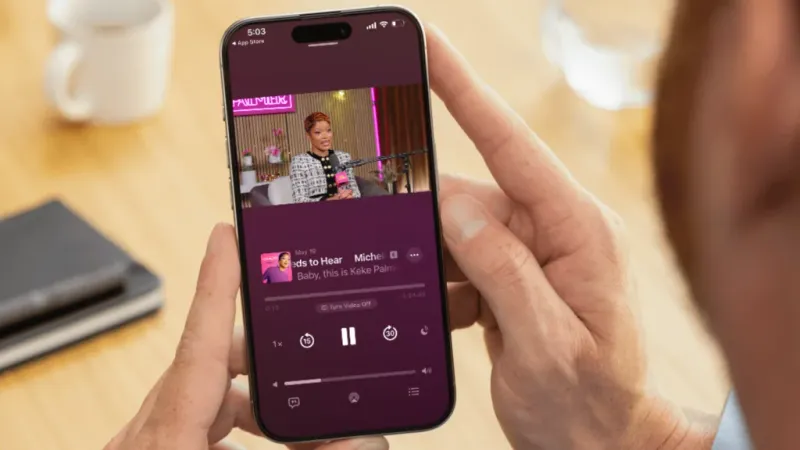
Apple Podcasts Just Added Native Video. Here's What to Know.
Apple Podcasts now supports native video. What podcasters need to know about the format, which hosts support it, and how it fits with YouTube.